

To reduce dental appointment no-shows, make the booking clear, help patients confirm or change it and investigate why appointments are missed. More reminders may help with forgetfulness, but they will not correct the wrong location, an unsuitable time or a misunderstanding about the visit.
Start with the patient journey and the practice’s own records. The most useful change is the one that addresses the cause you can actually see.
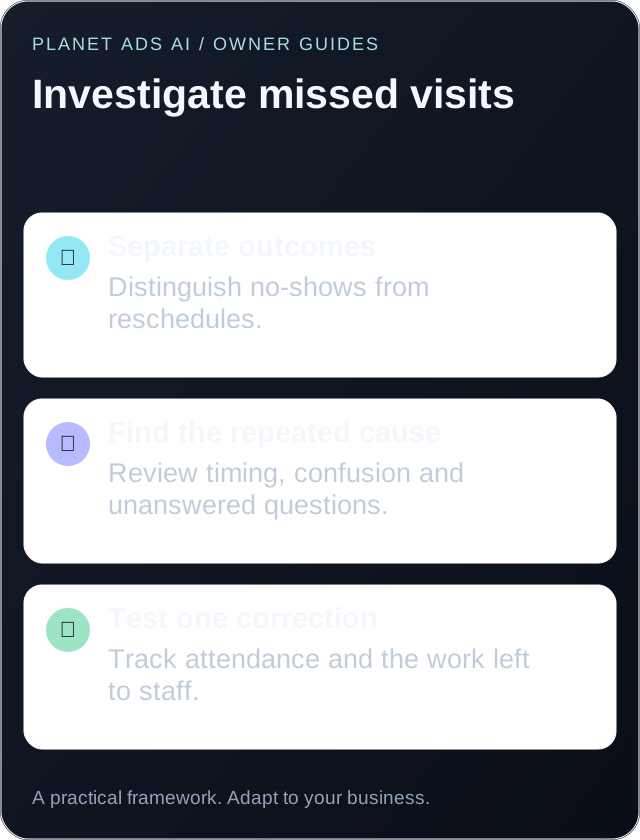
Separate a no-show from other appointment outcomes
Use a consistent definition for someone who did not attend and did not cancel under your reporting rules. Track advance cancellations, late cancellations, reschedules and clinic-created changes separately.
Choose appointments due to take place in the same period, then record the final outcome. If a person moves their consultation to next week, connect the replacement appointment to the original request so the practice does not count two new patients.
Keep both counts and rates visible. If a small campaign produces only a few bookings, one absence can change the percentage dramatically. That does not automatically mean the entire campaign attracts unsuitable patients.
Explain the appointment before booking it
For a routine new-patient visit, confirm what the appointment is for and what the practice needs the patient to bring. For an implant consultation, make the assessment process clear without promising treatment suitability or a specific outcome.
Confirm the location, provider where relevant, date, local time, consultation fee and approved policy. Explain whether the visit is an assessment rather than treatment that day. If a coordinator needs to answer a question first, give that conversation an owner.
Patients should not discover important conditions only after receiving a confirmation. A clear first conversation also helps your staff answer later questions consistently. The dental call script guide provides examples you can adapt with practice approval.
Use the patient’s approved contact method
The American Dental Association’s appointment confirmation guidance discusses reminders by phone, text and email, with attention to the patient’s preferred contact method and privacy obligations. Choose a process your team can manage reliably.
Confirm that the contact details are correct and that the chosen channel is appropriate. Keep reminder content discreet, particularly where a phone or inbox may be shared. Use only approved instructions and follow the requirements relevant to the practice’s location.
A reminder should identify the practice, state the appointment details and explain how to confirm or change the booking. It should not quietly become an unrelated marketing message.
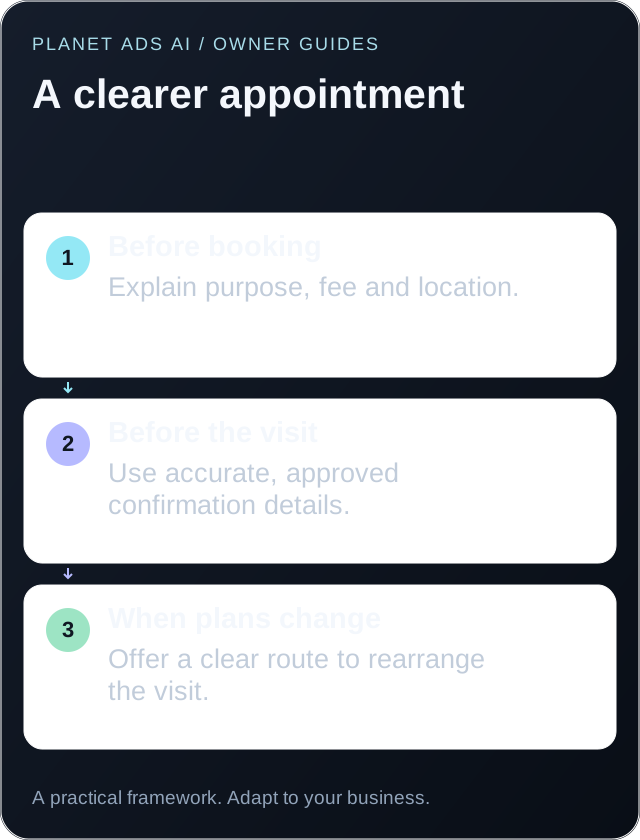
Make rescheduling easier than disappearing
Give patients a clear way to tell the team that a time no longer works. If they must wait on hold during limited office hours, a simple change can turn into an avoidable absence.
A useful response might be:
“Thank you for letting us know. Would you like us to check another suitable time, or would you prefer a call from the team?”
Offer only appointments that meet the practice’s booking rules. Procedure changes, linked appointments and clinical preparation requirements may need staff approval. Do not let automation move a complex appointment merely because another calendar slot appears free.
If a new time cannot be agreed immediately, record the next action and who owns it. Make the status of the original booking clear so the patient and the team do not hold different assumptions.
Review implant consultations separately
A person researching full-arch treatment may need to arrange travel, speak with family or ask about payment options before attending. Those are practical considerations to understand, not reasons to pressure the person into a booking.
Check whether the advertisement, landing page and coordinator all describe the same consultation. If the ad suggests an immediate treatment price but the call offers an assessment with unclear conditions, reminders will not fix the mismatch.
Use the implant enquiry questions guide to identify the next useful conversation. Keep clinical assessment with the dental team, and avoid treating a marketing qualification score as a measure of clinical suitability.
Do not adopt a deposit policy without reviewing the tradeoffs
Deposits or cancellation fees can affect both attendance and willingness to book. Their suitability depends on the practice, appointment type and applicable rules. Review the policy with the appropriate advisers before introducing or changing it.
If the practice uses a deposit, explain the amount, timing and cancellation or rescheduling terms before payment. Give staff a clear process for exceptions and disputes. Do not measure success only by fees collected; review attendance and the patient experience as well.
The ADA’s cancellations guidance is a useful starting point for reviewing how the practice communicates its scheduling policy.
Give unanswered confirmations a sensible next step
A missing reply does not necessarily mean the patient has cancelled. Messages can fail, numbers can be wrong and people can respond in unexpected wording. Follow the practice’s agreed policy rather than deleting an appointment automatically because a reply did not match one exact word.
Route questions to a person when needed. If the patient asks about medication, symptoms or treatment preparation, the response must come from the approved clinical process. Do not continue sending generic confirmation requests while the question remains unanswered.
Where AI Reception or messaging tools are used, test delivery failures and human takeover as well as the easy confirmation path. Ask whether reminders are included in the actual service scope instead of assuming every answering system provides them.
Follow up respectfully after a missed visit
A short, considerate message can offer a way back without assuming why the person was absent:
“Hello [Name], this is [Practice]. We missed you at your appointment today. Please contact us at [number] if you would like help arranging another time.”
Use the approved channel and process. If the person raises a clinical concern or complaint, route it appropriately. If they decline further contact, record and respect the applicable communication preferences.
Do not treat a missed appointment as proof that the patient does not value care. Your review should identify practical improvements, not assign motives.
Run a focused improvement cycle
Choose one repeated problem from your records. If location confusion appears often, improve the confirmation and directions. If long waits lead to rescheduling, review available consultation times. If people thought treatment was included, clarify the booking conversation.
Keep reporting definitions consistent while testing the change. Compare attendance, advance cancellations, saved reschedules and staff effort. Record what else changed, such as a new campaign or provider schedule, so the team does not attribute every difference to the reminder system.
A weekly review can be short: examine exceptions, assign the next correction and verify that last week’s change worked. Better attendance comes from a dependable process across the practice, not a reminder count.
Connect attendance with the wider growth plan
If the practice needs more suitable enquiries, review how to get more local dental patients. If missed calls are the first gap, read the dental AI Reception guide.
For help connecting Advertising and AI Reception with your team’s workflow, discuss a defined pilot with Planet Ads. Confirm the scope of any reminders or follow-up separately before launch.